Red Flag Warning: Mutual Aid and Survival in California’s Fire Country with Dani Burlison
Transcript
All right. Hello, and welcome to Live Like the World Is Dying, your podcast for what feels like the end times. I'm your host, Cassandra, and with me today is Dani, and we're here to talk about climate change and fires specifically, and the book Red Flag Warning. And I'm really excited because, as we were just saying before I pressed record, I live in Oregon and we have a lot to learn about wildfires as they increase here. So, but first, before we get started, Live Like the World Is Dying is a proud member of the Channel Zero network of anarchist podcasts. And here's a jingle from one of the other shows in the network. Doo doo doo!
Speaker B:Hell! Oh, this is an ad for The Spectacle. It's kind of a cultural analysis podcast, but also an anarchist podcast, but it's listed in the comedy section of Apple Podcasts, so everything we say counts as parody. Nice try, J. Edgar Hoover. It's for people who like low art and hate cops. Just a bunch of nasty freaks talking movies and shit, because it's a really grim time to be a radical. We just wanted to make something stupid. I'm on that Arm Joy shit. If I can't do bits, it's not my revolution. It's fun! So come on by! Every so often and listen to The Spectacle, the only podcast that— it's the, it's the only podcast. There's none left. There's none left. There was an accident and this is the only one now. The Spectacle from Strangers in a Tangled Wilderness on Channel Zero.
Speaker C:Mmm.
Speaker A:And we're back. All right, so I already said your name, I spoiled it, but if you could introduce yourself, pronouns, and just let folks know what brings you here, what brings you to this topic.
Speaker C:Great, thank you. Thanks so much for having me. My name is Dani, my pronouns are she/her. I live in Northern California, Southern Pomo Coast Miwok area, also known as Sonoma County, and I'm the co-editor of Red Flag Warning: Mutual Aid and Survival in California's Fire Country with my co-editor Margaret Alicia Garcia. And I'm here to talk about fires and climate change and all of that.
Speaker A:This book was put out by AK Press, gosh, recently?
Speaker C:It's actually the one-year anniversary is June. Yeah, this month.
Speaker A:Cool. I was really happy to get it and read it in preparation for this podcast because in my area, our first really intense fire season was the same year as COVID. And we learned a lot, and I think there's a lot we still have to learn. And so, yeah, I'm really excited to hear from you. And also, I feel like the tone you set in this book is hopeful and encouraging in a way that I really appreciated.
Speaker C:Yeah.
Speaker A:Yeah. So what, what is a red flag warning? Why the title?
Speaker C:Yeah, I have so much to say about that. It's interesting, the hopeful— that you found it hopeful. It makes me really happy because it's very hard sometimes to find that hopefulness and to convey that because things are just so dire a lot of the time. So a red flag warning is a warning put out by, quote, officials like city, state, county government when conditions are perfect for fires. So that means typically high temperatures, really low humidity, and strong winds. So red flag warning will go out to certain areas just to really alert people, get them, you know, get it on their radar that they might have to evacuate and they should have a plan to leave if they need to, or the power outages or any of those things that come with—
Speaker A:Yeah.
Speaker C:Living in fire country.
Speaker A:And what has your experience been like with fires and red flag warnings?
Speaker C:Oh my gosh, a lot. So I grew up in really, really rural Northern California, and we had fires not where I was living specifically, but in the area in the Lassen foothills near where I grew up. So summertime, early fall, lots of smoke, but it was so removed that I never felt unsafe. I never really felt like it was a possibility that it would come into neighborhoods. So fast forward, I've been in Sonoma County since the mid-'90s. And in 2017, we had our big, you know, it was the October firestorms. The Tubbs Fire was the main one. And I remember that early evening hiking this spot with some friends, or starting to, and we stopped because the wind was just so intense, dust storms, and it was really dry, like that kind of staticky dry feeling that you can get when the humidity is really low. But I was like, I didn't really think anything of it. We had had a fire over the hills a couple years before that we could kind of see the smoke, but again, it was like—
Speaker A:Yeah.
Speaker C:burn Santa Rosa? It's a city of almost 200,000 people. There's no way a fire is going to come into the city limits. So that night, I think it was around 10 o'clock the fire started, but I was asleep. I woke up probably at like 2 or 3 in the morning and I could hear electrical transformers exploding around my neighborhood and sirens. And I looked at my phone and I had all these text messages from people like, we just had to evacuate. And so I, I couldn't really comprehend the magnitude of the fire. In Santa Rosa alone, we lost like 6,000 homes, 7,000 structures, I think something like that. And it just burned through so many neighborhoods. So many people I know lost their homes.
Speaker A:Mm-hmm.
Speaker C:And it just— and it didn't stop. It just kept going and going and going for about 3 or 4 weeks. We'd think that it was stopping, and then it would come on again and burn into a different neighborhood. So my experience, I was just shocked. It was very smoky, obviously. And there were groups of people setting up healing centers, mostly for immigrant communities.
Speaker A:Mm-hmm.
Speaker C:I was a part of a group that was taking herbs and different herbal support to one of the camps where couple hundred firefighters were staying. Yeah, it was just really intense. It was very, very intense. It was very traumatic. And it triggered a lot of stuff for a lot of people just being in that feeling of unpredictable non-safety, right? It was just really scary. So that's kind of in that moment how it started. And then we had another And then I watched over the years the Paradise Fire, the Redding— the fire in Redding. Those are places I grew up going, spending a lot of time in because I lived right between Redding and Chico, or Redding and Paradise. And we had another fire in 2019 and another fire in 2020 during the first year of the pandemic too. And so, yeah, I'll stop there. I'm sure you have another question. I could just ramble, ramble about all of this.
Speaker A:No, that's That's good information, especially the trauma piece. I've had some neighbors around the corner who are an older queer couple, and my grandma and I used to play pinochle with them in the evenings.
Speaker C:Aw.
Speaker A:I remember being like, why did you move here? Because I live in a town that isn't terribly appealing to most people, especially, you know, they were used to like a nightlife and stuff. And they were like, oh, because of fires. We moved here from California. Just had this deep trauma around even smelling smoke. And then 2020 is when we had some really intense fires here, and they moved. They sold their house. They're like, we can't. We can't. It's too much. It was too close. And just on a sensory level, how much it seems like that stuck with them.
Speaker C:Mhm.
Speaker A:They covered up the fireplace in their house. They were like, we don't want to smell smoke. It's a lot. One of the chapters I really appreciated in your book was about mental healthcare, and I was hoping you could talk a little bit about that, like what it looked like in the immediate time when the fire is sort of ravaging communities, but then also longer-term responses, especially on a grassroots and mutual aid level. Like how are people supporting each other?
Speaker C:Right, right. Yeah, so that piece on mental health I originally wrote for YES! Magazine, and then they ended up having me write like a series of different articles that I kind of meshed together and then expanded for the book because it impacted— like, I was living in a neighborhood that didn't have power outages or evacuations, but there was something about that threat of danger that just triggered a lot of stuff for me personally. So I'm like, if this is triggering me and I'm like in a safe neighborhood, like I'm safe where I'm at, like how is this impacting people that their houses burned down. Or, you know, we have a huge undocumented community here. Fire season is also like grape harvest season, and we're like a huge wine county. And so they're not able to work, and they're not able to— like, there's just so many different layers of that. I found during— so I'm— there's, you know, there's like the fight or flight kind of response, like with traumatic things. For me, I'm like, I have to do something. So I just kind of went overboard. I wasn't sleeping very much, so I'm like, I just need to do something. So I was trying to help organize some of these like clinics that were popping up. People just looked stunned, like going to the grocery store or going to the coffee shop. Everyone around me, everyone just was like, just huge red eyes from the smoke and not sleeping, but just shocked. There was just a sense of shock, collective shock with, you know, thousands of people just kind of just stunned that this happened. And one of the things that I talked to someone at one of the healing clinics who was an acupuncturist, and she was like, oh, our lungs are— that's where we hold grief. And so of course, if people are inhaling all this toxic smoke, and there's this trauma of their town or their home or their neighborhood on fire, like it's going to trigger unresolved grief. So that's part of what I was seeing. It didn't really register for me until after the fires were out. And then I was like, oh, it just started bringing up a lot of stuff for me. But that fear of smoke is so real.
Speaker A:Mm-hmm.
Speaker C:And the wind, even the wind, anytime it's hot and windy here, everyone's just like totally on high alert. But I think that, I mean, the PTSD piece is real, you know, again, that sense of fear. the lack of safety, a lot of people ended up, I think, with PTSD here.
Speaker A:Yeah.
Speaker C:There were health centers and therapy clinics that were offering free mental health services. Again, there were these pop-up clinics that were happening where people were coming in and doing herbal support and acupuncture and massage. And that community support piece is so important to mental health. Um, I ended up after that fire taking some trainings in psychological first aid, and that was so huge for me.
Speaker B:Mm-hmm.
Speaker C:Um, you know, it's, it's so basic. It's like, I'm not gonna do this thing for you, but I'm gonna walk through it with you, you know, so people can still have that agency over their own lives and recognize that they're still able to make decisions and, um, take steps to help their own healing process. That was very helpful for me too, because when I go into the— when there's a fire and I start getting manic and going through my own stuff, like having people in my life that know, like, don't do the thing for me, just kind of like encourage me to do it on my own and like be there to help support me.
Speaker A:Can you say more about what you mean by psychological first aid? Is that like skills for in the moment when someone is like in the traumatic event?
Speaker C:Yeah, yeah. My understanding in the training that I took, um, yes, it's, it's for those acute moments, because it's going to really help their recovery in the long term if in the moment they're still able to find some kind of agency and like, again, um, be supported in taking steps on their own, their own well-being, right?
Speaker A:Right.
Speaker C:So instead of— so example, if your house burns down, instead of me coming in and grabbing you and telling you, I'm taking you here, I'm putting you here, I'm gonna do all these I'm gonna help you sign up for housing. Of course, when we're in a huge traumatic experience, like, that sounds really great. But to even be able to do one little thing, like make one decision about, um, actually, I wanna stay at that hotel if there's a voucher for that.
Speaker A:Mm-hmm.
Speaker C:Actually, I don't wanna go to that shelter. I'd rather go to this one. So that, like, encouraging people to make some decisions for themselves is so huge. It sounds like such a basic thing, right? But it's not. it's, it's really big and it's really helpful. The other piece that I kind of learned and was researching and interviewing a lot of people about, in addition to that, if someone is feeling stable enough to do some kind of volunteer work or some kind of mutual aid even in their neighborhood, that's a huge piece of the recovery process. Like, we don't— they say, like, don't tax yourself and overburden yourself with connecting with your community and doing things for others. But if you have the capacity to even like bring your neighbor a meal or work at a shelter or organize rides for someone, or like give people herbs to like help with smoke inhalation or something like that, that is really beneficial to the mental health recovery as well.
Speaker A:Yeah, it's the mutual part of mutual aid, right? Yes.
Speaker C:Yeah, I interviewed a couple of people who were fire survivors. That one woman lost a lot of family members actually in a fire. It was really traumatic for her, but she was like, I was either never gonna get off the couch or I was gonna get off the couch and go help serve food at this shelter in this nearby town that also had a fire after her fire. And yeah, I've interviewed a lot of fire survivors that have done that, and that's been a huge part of their recovery process.
Speaker A:That makes sense to me. I don't know, I think about that in terms of other types of trauma as well. Like most of the folks at the domestic violence hotline are DV survivors, and that's part of their healing process, you know?
Speaker C:Absolutely. Absolutely.
Speaker A:That makes sense. What about sort of long-term mental healthcare or longer-term mental healthcare? Are there ways that you've seen communities post-fire deal with things like that?
Speaker C:Yeah. So one of the places I mentioned in that mental health piece in the book is this kind of pop-up healing space that was just kind of thrown together, and out of that kind of sprang the UndocuFund program too. They were both kind of umbrellaed by the North Bay Organizing Project, which is a great organization here that does like just tons of mutual aid around housing rights and supporting undocumented folks. But they continued those, right? So first they were like every day during the fire, and then they were once a week, and I think they're still doing them like once a month. And not just for fire survivors, but they've also—
Speaker A:Yeah.
Speaker C:provided these— I don't want to say clinic, but these spaces, these kind of healing spaces for people that— I'm a part of Rapid Response here too. And so folks that are working around immigrant justice also, it's like, are you a fire survivor? Are you somebody that's a community organizer and you're just dealing with stress and trauma? They do that still once a month. I've been able to go to a couple of them and it's amazing. They have food and yoga and acupuncture and herbs and art projects, and it's just a place for people to come together. And that community, like coming together with community, is, I think, just such a huge part of it too. So I've seen that. I've seen some therapists that continue to do one-on-one with like climate catastrophe survivors, because we also have floods here. We get all of it.
Speaker A:Yeah.
Speaker C:But I think like, For me personally, I actually was in a yoga teacher's training program when it happened. And then I immediately went into a couple of trainings specifically for trauma, trauma-informed yoga. One was specifically to work with fire survivors. So there are a lot of people doing stuff like that. I ended up like going deeper into my herbal studies. And there's a lot of people here that have done that and that provide services or just like mutual aid around My old neighbor and I used to set up little tables outside during the first part of the pandemic when there was a fire with free herbs, and here's the directions on how to steam these, and here's the directions on how to make tea out of this one. Which again, that's physical health, but it also is very much connected to the mental health piece.
Speaker A:Yeah, for sure. I'm curious, we saw it here during the last worst fire season, Yeah. It was interesting to see the structures that were in place that ended up being the most beneficial and active in supporting people, especially migrant communities through all sorts of things that were happening for them during the fire and also COVID. And then the structures that came about as part of that work, that support around wildfires that then continued. And I'm not sure how to narrow this question down, but I guess I'm curious, what sort of structures should we be putting in place now for fire season?
Speaker C:Yeah, that's such a good question. I think about this all the time. And the more time goes by and the more catastrophes we're dealing with, whether it's ICE or police brutality or whatever it is, you know, I think about like this neighborhood community defense type of thing.
Speaker A:It all—
Speaker C:like any of the organizing you're doing around mutual aid within any of those realms are going to like— you can use them for any of them, right? One of the biggest things, one of the biggest issues we had here was just like county services, like they just weren't prepared.
Speaker A:Wow.
Speaker C:And again, this is my whole like, don't trust the government, you can do all this stuff without them, where so many people People are like, oh, if we have a Democrat in office as a governor, it's going to be better for us during wildfires. It's like, no, the fuck it's not. It's not. Gavin Newsom is not controlling whether or not we have fires. He's garbage. Anyway, that's a whole— but I think like—
Speaker A:This is a safe space to be anti-government.
Speaker C:Okay, I know. Oh, I just like hate Gavin Newsom so much. So much. He's so horrible. I'm so glad he's leaving. Anyhow, but I think so many people are so dependent on like, oh, well, I'm waiting for them to give me an evacuation warning, or I'm waiting for somebody to tell me what to do, or I'm waiting for somebody to come in with some relief money. And a perfect example of what happened is the UndocuFund popping up. They're now under the umbrella of North Bay Organizing Project. They're there and have funds for undocumented folks.
Speaker A:Yeah.
Speaker C:that are impacted by climate disasters. So that's one thing, but that's on a big, more organizational level. I think like knowing our neighbors, just real basic stuff, like knowing our neighbors, being individually prepared. The more individually prepared we are, the better we're going to be able to support other people. And that means like everybody. I get really annoyed with people that I'm like, You know, I have friends that, like, have money, have time, are, like, you know, stable in all the ways, and they're not totally prepared. But I'm like, wait, that means that I'm gonna have to be doing something. Like, we all should be as prepared as we can to support folks that are marginalized for whatever reason. If they have a disability, if they're low income and they don't have—
Speaker A:Mm-hmm.
Speaker C:Fucking gas to put in their car to get to an evacuation site. So I think like really basic stuff. And again, this applies to ICE in our communities, this applies to climate disasters. Just really know who's in your neighborhood, know your community, be as like prepared as you can be on an individual level, and also like just talk to people about it.
Speaker A:Mm-hmm.
Speaker C:I know a lot of people are really afraid to go to shelters, for example, because they're worried that ICE might be there. So some very kind people in a rural part of the county that had a little, like, had a ranch where, like, undocumented people can come here, and they had people guarding the gate so police and ICE, like, would not come in. So I think, like, you know, people that are really resourced can really be great support in these situations. And often in my experience, they're only looking out for themselves. So then it's like kind of leaves the rest of us—
Speaker A:Yeah.
Speaker C:Just really, again, just taking care of ourselves the best we can and taking care of the people that are in our immediate lives and in our communities.
Speaker A:Mm-hmm.
Speaker C:And kind of spotting who's the most vulnerable person in my personal friend group or community, who's the most vulnerable person in my neighborhood. Are we going to share evacuation routes? Are we going to share a car if we have to evacuate? really being strategic outside of the disaster time. And we see that, of course, with ICE right now too. It's like, they're not doing raids here, but there's a lot of people doing a lot of groundwork to prepare for that if and when it does happen. And I think the same thing goes for these climate catastrophes because we don't know. It's really unpredictable. It's really— we haven't had one in a couple years. And so, I'm like, is this the year? They declared June 1st the start of fire season already.
Speaker A:Yeah.
Speaker C:So I'm like, okay, what are we— you know, gotta have our go bags, gotta talk to our neighbors, all of that.
Speaker A:I really appreciate you framing it that way. A lot of what we talk about here and with strangers in Entangled Wilderness in general is preparedness through the lens of community, and that means being personally prepared so that you can then help other people. Or as prepared as you can be. And hopefully we create these webs of connection and can cover each other's asses.
Speaker C:Yeah.
Speaker A:It's also— I'm thinking about access to resources and just how I've seen things go in the past. And I think some folks might disagree with me about this, but coming from the space of anarchist mutual aid groups, people tend to be really resistant to working with other structures around them, especially nonprofits, government.
Speaker C:Yeah.
Speaker A:I get that. I think in a disaster, because of the way the world is right now, it's really important to have people who can bridge those different spaces to access resources. Because what we're good at as mutual aid groups is getting things done quickly. Nonprofits are really good at accessing funds, you know?
Speaker C:Really good.
Speaker A:Yeah. I guess my real-life example is that during the fires here, during COVID one of the main things we were trying to do is get PPE to farmworkers who still had to work breathing in the smoke with COVID rampant, you know, and the county had thousands of KN95s but wasn't distributing them. And so someone knew someone who had access to them, who was willing to go through the like government to nonprofit mutual aid group pipeline. and get us the masks. And we then got thousands of masks to people. So, but we had to like work with folks doing other types of— I'll just put it that way. Yeah. Networking. Yeah.
Speaker C:No, that's— I love that pipeline. It's so real.
Speaker A:It's unfortunate. Yeah.
Speaker C:I mean, there are a couple nonprofits here that I'm pretty close with folks that work for them and do organizing outside of them. So there's a lot of overlap and connection there. Um, but, and one of the organizations has been, um, working with farm workers to kind of address this, like, work safety during fire season. Like, when we had our 2017 fires, and I think the 2019 ones as well, a lot of the workers in the vineyards, it was an evacuation zone, and they still were expected to go work, which is totally illegal, right?
Speaker A:Jesus.
Speaker C:But since they're undocumented and they don't have the same rights, um, so there's been some And then they don't get FEMA, right? They don't get any kind of disaster aid because they're not citizens, which is crazy-making. So one of the organizations has been going and appealing to these winery owners like, hey, can you set aside a pool of funds so if your workers can't harvest grapes because of fire season? And they've actually been pretty successful in doing that.
Speaker A:Wow.
Speaker C:But again, that's nonprofit and But something about masks, I was in Pasadena during the fires there, right before the book went to print, actually. And I wrote the afterword after the book was, like, almost right about to go to print. And AK was like—
Speaker A:Sorry.
Speaker C:Wait, you're in Pasadena? Can you— what are you talking about? Like, can you write this thing real quick? But I just happened to be down there, and Mask Block, oh my God, they, like, got masks out even to, like, the to like the county and city officials were asking Mask Bloc. Yeah, for masks, because they were so unprepared for it. And again, I point to that as an example because I'm like, there's a bunch of anarchists that got masks to the government officials. Like, who's gonna save you?
Speaker A:Like, who's—
Speaker C:who's showing up to help first? It's not—
Speaker A:We're really good at distributing stuff.
Speaker C:So good. Oh my God, I know we have so many COVID tests and masks just because we like, you know, yeah, we're not stockpiling, we share everything. But yeah, yeah, it's really, it's really wild. And there's this other piece too about the government being garbage. The way that they declare an area a disaster zone is how, like, the capital related to the place that's on fire.
Speaker A:It's economic, right? Like, yeah.
Speaker C:Totally. So Sonoma County, oh my God, like we're wine country. There's all these vineyards, all these winery owners. It's a lot of money here. There's also a lot of people without money here. But they're like looking at that, like, oh, we have to save that. And then Margaret, my co-editor, addresses it in one of her pieces in the book. She was up in Plumas County, which is really rural. And because the homes aren't worth as much, same thing with Paradise, the homes weren't worth as much, so it took longer for them to declare disaster. So for me, I'm like, why is anyone waiting for the government to declare a disaster? Like, we know what a disaster is. We know when our community is in danger, when people's lives are being threatened, when they're, you know, out of work, all of that. Like, we can see that. And the better we are at building relationships with people, um, getting them the support they need before the government declares a disaster and like gives them like you know, $1,000 or whatever they did during COVID I think the better off we'll be.
Speaker A:Yeah, agreed.
Speaker C:I can really rant about all this stuff. It makes me—
Speaker A:No, that's— I think that's the thing we rant out of— rant about here often, especially the importance of getting to know your neighbors, even if you disagree with them politically, because climate change does not differentiate. Yeah.
Speaker C:It doesn't differentiate. And there's a piece around, like, it impacts people in different ways based on your class too, you know?
Speaker A:Like, yeah, people—
Speaker C:yeah, renters are so screwed when there's a fire. Um, even with renters insurance, it's still like not your house. So even if the house gets rebuilt, it doesn't guarantee that you're going to have a place to go back to, right? Anyhow, yeah.
Speaker A:It's true. One of the parts of the book that really stood out to me is the chapter that's talking about working with incarcerated folks and just the bridging of abolition, prison abolition as an ethic with climate change and community preparedness around disasters. So I'm just curious if there are other things that stand out to you, other ways that you're seeing folks in your area bridge different concerns like that?
Speaker C:Right, right. Yeah, that's such a good question. There's so many things I'm seeing. One thing specifically that I've been seeing so much more of over the last, you know, 5 to 10 years, especially since 2017 fires, people learning about fire ecology and all of these organizations popping up and partnering with like Native communities to learn about not just You know, they call them prescribed burns or controlled burns through like Cal Fire, which is our statewide fire department. But through Indigenous folks, through that lens of like, no, it's not just a controlled or prescribed burn. This is a cultural practice that we have and this is why we do it. There are so many planned burns here all the time. I think I got a notification last week that there was going to be one like out on the coast. So luckily they're notifying people. So when we smell smoke, we don't like lose our minds. But so that is something people are learning. I would've never imagined some of the people I know that are just like, let's talk about fire ecology and this cultural practice. That's been amazing. And seeing the formerly incarcerated firefighters partnering with some of these organizations, because part of the forestry and fire recruitment organization that I interviewed Brandon Smith for, in the book, um, one of the things they do is they do outreach to folks that are in the— they call them fire camps— and that are incarcerated.
Speaker A:Oh.
Speaker C:So those folks go out and work on fires. They do outreach there so when those people get out of prison, they get a paid training and support in finding employment. Um, so one of the things that they do in their paid training is, is take folks out and do those prescribed burns, those cultural burns. So I'm seeing a lot of, like, it's really cool, like this kind of networking crossover between tribal people in Northern California and formerly incarcerated firefighters and like government agencies and nonprofits. There's this kind of merging of all these forces, which, you know, one of my big complaints about nonprofits is like, oh my God, these 2 nonprofits are doing the same thing. Why aren't they collaborating more? Like, you know, when I worked in nonprofits. And so now I'm seeing like, oh, this place has a gap that these folks can fill. And there's more— I'm seeing like just more cross-collaboration and communication between either grassroots networks and nonprofits and all of these different things, which is, which is great. Yeah.
Speaker A:Can you say more about what differentiates a prescribed burn and a cultural burn? That chapter was amazing.
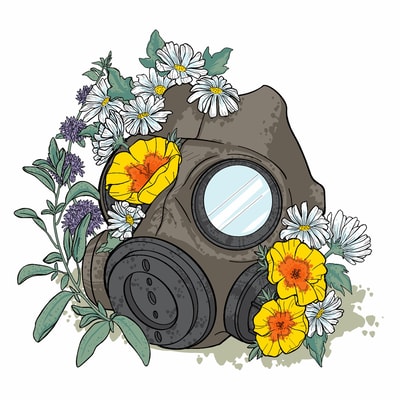
Speaker C:Yeah, she's so great, Margo Robbins. Side note, her co-director of the organization that she's with, the Cultural Fire Management Council, her co-director's son is the person that did our cover art for our book. It's all in your mind.
Speaker A:Oh, okay.
Speaker C:Yeah, he's an amazing artist. So the way that she described it to me, and it's Margo Robbins from the Yurok Nation in far, far northern California, coastal Northern California. Cultural burn. So a prescribed burn is like CAL FIRE, local fire department, whoever going out and burning, you know, very low heat, low slow-burning fire to basically remove what we call fuel for fire, right? So getting rid of all the dead brush, and it really actually helps regenerate a lot of native plants too. But they're doing it for fire mitigation, right? That's that. But with the cultural burn, it's actually this practice, this intergenerational practice of going out to tend the land. It's not necessarily with the framework of, we're going to go out and burn this So if a fire happens, it doesn't get us, which is the prescribed part. Their piece, which it has that benefit for sure, is this is our land, this is how we tend it. We'll burn this piece of land and it helps regenerate plants that are used by different native people around the world, but specifically here in California. So those can be medicinal plants. She was talking about the hazel, I think, that they use for basket weaving. So there's— it's more about— it's less about managing the land for them and more about having a relationship with the land. And what's amazing is that her— that organization has been partnering with CAL FIRE and some of these other fire agencies, government fire agencies, to help them get that perspective, which again, I never would have thought CAL FIRE would be like down with. Learning about a relationship with the land, it's usually like, we gotta put this fire out or prevent a fire. So that's really like—
Speaker B:Yeah.
Speaker C:That's pretty great. It's pretty unexpected. And I think little by little, that could change the way that people are really, again, just relating with fire and relating with the land. I think it's pretty sweet.
Speaker A:Yeah, the idea of fire as a practice and as a thing that's actually nurturing life and plant growth seems like a pretty important reframing. And certainly not all fires are that way. They can be large and scary and destructive, but that was one of the most hopeful chapters for me. It was really cool.
Speaker C:Yeah, and just everyday people learning how to do it. There's organizations where they're like, we're having a fire prescribed burn day. You can come out and learn how to do this too. And I think that piece And I think that piece actually is very helpful with people that have the PTSD from fire too, is understanding it more, being close to it without the threat of danger, I think is a really important piece of the healing process as well.
Speaker A:Yeah, I imagine being around people who have done it before and feel good and calm about it is probably good for the nervous system.
Speaker C:Yeah, definitely.
Speaker A:I'm curious, when I was thinking about this episode, I was sort of thinking about preparedness before fires or whatever disaster is upon us, during, what that looks like, and then the aftermath. And they're all such big topics that I've struggled a little bit to find entry points for each of them. I do think we talked about, yeah, building networks, getting to know our neighbors, being personally prepared beforehand, which can mean different things in different places that face different sorts of social, political, environmental upheaval. But the thing I want to ask you about again is the aftermath.
Speaker C:Yeah.
Speaker A:Just what are ways that we can continue to support one another, whether it's mental health care or these clinics you're talking about? Or yeah, what are some examples of ways you've seen people continue to support themselves, their communities after these really catastrophic traumatic events?
Speaker C:Right. Yeah, it's interesting because I never thought of it in a way of before, during, and after. I feel like it's more like between than after. I don't feel like Yeah, it's interesting to think about it because I always just— the way that I always think about it is like, we're just in between right now. We're just in between.
Speaker A:That makes so much sense.
Speaker B:Yeah.
Speaker C:Yeah, it's almost like, can we have a full recovery while we're also preparing for the next one? Yeah, because it's going to come back. It's going to happen again, right? So that's how I feel about it. And if it's not a fire, it's ice. or it's a flood or it's—
Speaker A:Yeah.
Speaker C:Who knows? So, I always feel like we're just in between. I interviewed someone for a different— for a project who I just cannot forget this. She said she doesn't say after or before, she calls it blue sky times, right? It's that in-between fires. It's like, it's not after, it's not technically— well, it's It's technically after one and before the next one, but we don't know when the next one's coming, so we just call it blue sky times. It's like this pause where we can actually take a breath and just kind of get ourselves together a little bit to go out and prepare for the next one. Mm-hmm. So I guess in terms of thinking about it as after, Um, I just still think about it between—
Speaker A:I think finding—
Speaker C:No, yeah, you don't have to think about it as after.
Speaker A:What you're saying makes total sense.
Speaker C:Yeah, I think though, like, like, we need to rest when we can. I think that's so important. And have time with our communities where we're not just like totally stressed and panicking and preparing or responding to something, all of that. I think that piece is so important. This isn't specifically around climate catastrophes necessarily, but with ICE right now, it's not quiet in the Bay Area. There's kidnappings happening every day, but we're not seeing what we saw in Minneapolis, right?
Speaker A:Mm-hmm.
Speaker C:So there's this quiet— we have this kind of slow time where, for me, I'm like, let's get together with friends and let's prepare. Let's do this stuff. stuff where we're laying the groundwork. So if and when shit really goes down here with ice or the fire, we kind of have the muscle memory of showing up so we can pretty quickly step into that active mutual aid place. But I think that I saw some dumb thing on Instagram recently. It wasn't necessarily dumb, that's mean, but something about You know, like the social, like, fun. And I, and I love the Emma Goldman quote that, you know, if I can't dance, it's not my revolution or whatever. Like, like, we have to be able to also remember that we can have joy and fun and watch stupid fucking movies and like, you know, go for a bike ride or like plant your garden or have a party and dance with whoever. Like, those pieces are so important too, because if we're just constantly stuck in that endless preparation and recovery place, that's really hard on our nervous systems. It's just so— it's too much. So I think in those in-between times, finding— just continuing to work on community building, but have fun with it. Do something fun.
Speaker A:Go camping. Yeah. I appreciate that reframing so much. And yeah, building relationships is being prepared because we need those intact. I feel like you mentioned Instagram, and I feel like there's— I watch the pendulum swing in social media spaces sometimes between like, self-care isn't radical, self-care is the most radical. And I'm like, it's probably somewhere in between. It's probably like—
Speaker C:Yes.
Speaker A:radical to take care of yourself so you can take care of other people. You know, we need both. Um, yeah, that's my controversial take for the day.
Speaker C:What? No, I, I agree with you so much. Like, that's how I feel. I'm like, it's not selfish. I mean, okay, there are definitely people out there that do self-care for themselves only, but from my perspective, it's like, the better I take care of myself, the better I'm going to be able to help my community. Nobody wants me showing up all raggedy and stressed out and having a manic episode. Like, that's not going to be helpful to anybody. So when I can rest, I'm going to rest. So I definitely feel like some people do practice self-care just for themselves only. But for me, I think that, you know, the better that I take care of myself, the better I can show up for my community. You know, like, nobody wants me showing up raggedy, burnt out. And, and, you know, I'm getting older and I kind of need to rest when I need to rest so I can actually show up and have the capacity for community building.
Speaker A:Yeah, that totally makes sense and lines up with my own experience around disasters and mutual aid work and just talking to humans as well.
Speaker C:Yeah.
Speaker A:And I feel like a lot of this book was about self-care, community care, and I really appreciate that those skills, we can talk about them in terms of fires, which is something you and I both experienced, but we can also expand those out to folks dealing with other types of catastrophe like we talked about, which is probably a good place to wrap up. So yeah, I'm really excited you were here. I'm really excited about this book. Maybe you could give a little plug for the book here if there's a website or anything you want folks— anywhere you want folks to go to look for your work. Now is a great time.
Speaker C:So the book is Red Flag Warning: Mutual Aid and Survival in California's Fire Country. It was published by AK Press in summer of 2025, and it's It's co-edited by myself and Margaret Alicia Garcia. Of course, you can find it at AK Press. It'll be at all the anarchist book fairs and independent and other bookstores. Let's see, other things about me. You can find me— I'm a member of the CAAW Collective, so caawshinythings.com is somewhere where you can find me, or my personal website, dannyberlison.com.
Speaker A:Yeah, thanks for being here. I didn't realize you're part of CAAW. That's amazing. Everyone should check out Cog Collective. And yeah, thanks for being here, and I hope it's an easy wildfire season for you. This podcast is produced by the anarchist publishing collective Strangers in a Tangled Wilderness. We're on Bluesky and Instagram @tangledwilderness. You can get our books and zines and read All about our stuff at tangledwilderness.org. And this podcast and a lot of what we do is made possible by Patreon supporters. So if you want to become a supporter, check out patreon.com/strangersinatangledwilderness. If you support the collective at $5 a month, you get a discount on our digital content. At $10 a month, we will mail you a monthly zine. And then at $20 a month, we'll give you a shout-out on our podcasts, which is— the thing I'm about to do. First, I want to give a shout out to folks who backed us for the Immortal Choir Kickstarter. That includes Cool Zone Media, Be Kind and Talk to Strangers, Ulisky and Alder, Tikva's Favorite Stick, The Waterfront Project, Nico, The Kao Initiative, Groot the Dog, The Black Travel Collective, Dolly Parton and Edgar Meowlinpoe the Cats, Accordions, just in general, apparently. Experimental Farm Network. Arguing about what to shout out. Tenebrous Press. Potatoes. Staying hydrated, brought to you by Hannah Simone Weil. For our Patreon supporters, thank you so much to the first few chapters of The Eden Project by James Hollis. The truth that we will outlive them. Ponoko Pink Pistols. The Kiwanis Socialists. The Astoria Food Pantry, The Athens People's Assembly of Athens, Georgia, Opticuna, TSNB, Baby A-Cob and Her Three Great Pups, Sarah McCrafty, Your Canadian Friend, Mark, Tiny Nonsense, The Golden Gate 26, The Kao Initiative, The Incredible Ranarai, Alexander Gopal, The Future— A Future for Abby, Max, Enchanted Rats of Turtle Island, Lancaster Chooses Love, Karen, the Canadian Socialist Rifle Association, the Massachusetts chapter of the Socialist Rifle Association, Feral in West Virginia, Blinkcat, Shulva, Jason, Jenny and Phoebe the cats, Aiden and Yuki the dog, Sunshine, Amber, Ephemeral, the Appalachian Liberation Library, Portland's Hedron Hackerspace, Boldfield, Toki Red, Julia, Carson, Lord Harken, Community Books of Stone Mountain, Georgia, Princess Miranda, Janice and Odelle, Ali, Papa Runa, Milica, Theo, SJ, Paige, David, Dana, Micah, Chris, Kirk, Micaiah, Nicole, Antiqua the dog, and of course, as always, Haas the dog. We hope you're all doing as well as you can be in times such as these, and thank you so much for listening.
Episode Summary
This week on Live like the World is Dying, Casandra talks with Dani Burlison, editor of Red Flag Warning: Mutual Aid and Survival in California’s Fire Country about wild fires, community, mental health, and preparedness for a world that might be more likely to be on fire but also more likely to be filled with trauma-resilient people who know how to get through it. Get Red Flag Warning from AK Press at https://www.akpress.org/red-flag-warning.html
__
Guest Info
Dani Burlison can be found with CAW (Collective of Anarchist Writers, a Corvid Appreciation Working-group) at CAWshingthings.com or at https://www.daniburlison.com/
Publisher Info
This show is published by Strangers in A Tangled Wilderness. We can be found at www.tangledwilderness.org, or on Twitter @TangledWild and Instagram @Tangled_Wilderness and Blue Sky @tangledwilderness.bsky.social You can support the show on Patreon at www.patreon.com/strangersinatangledwilderness
Find out more at https://live-like-the-world-is-dying.pinecast.co
This podcast is powered by Pinecast. Try Pinecast for free, forever, no credit card required. If you decide to upgrade, use coupon code r-69f62d for 40% off for 4 months, and support Live Like the World is Dying.